

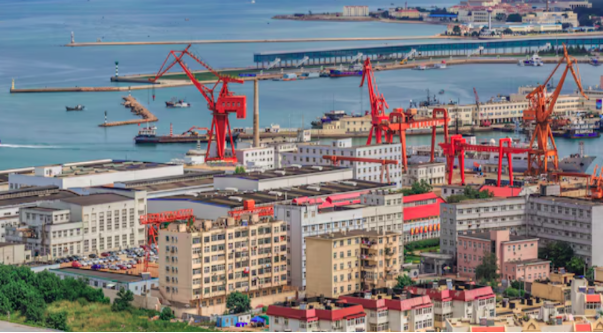
The maritime infrastructure along the Gulf Coast serves as a vital artery for international trade, connecting domestic production with consumer markets across the globe.
As one of the most significant logistical hubs in the Western Hemisphere, the port of Texas plays a transformative role in the movement of energy, agricultural products, and manufactured goods.
Its deep-water access and advanced terminal facilities make it a primary destination for the world’s largest cargo vessels.
By integrating cutting-edge technology with expansive inland connectivity, this maritime gateway ensures that the flow of global commerce remains efficient, reliable, and responsive to the needs of the modern economy.
Enhancing Energy Export Capabilities and Global Security
The region is widely recognized as the energy capital of the world, and its maritime facilities are essential for the distribution of petroleum and natural gas. The port of texas facilitates the export of millions of barrels of crude oil and liquefied natural gas to international partners every day.
This high-volume capacity is critical for stabilizing global energy markets and providing a reliable source of fuel for industrial nations.
The specialized terminals and pipelines connected to the harbor allow for the rapid loading of supertankers, ensuring that the energy supply chain remains resilient even during periods of high global demand.
Driving Agricultural Productivity through Massive Bulk Exports
Beyond energy, the agricultural sector depends heavily on the logistical prowess of the Gulf Coast to reach international markets. The port of Texas serves as a primary exit point for vast quantities of grain, cotton, and livestock products harvested across the central United States.
High-capacity silos and automated loading systems allow for the efficient handling of bulk commodities, reducing the time and cost associated with long-distance transport.
This efficiency supports the livelihoods of thousands of farmers and contributes significantly to global food security by ensuring that essential crops are delivered to nations in need with minimal delay.
Optimizing Containerized Trade and Consumer Goods Distribution
The rise of global e-commerce and specialized manufacturing has led to a dramatic increase in containerized shipping. To meet this demand, the port of Texas has invested heavily in modern crane technology and expanded container yards.
These improvements allow for the seamless handling of thousands of twenty-foot equivalent units from major shipping lines.
By serving as a central hub for consumer electronics, clothing, and machinery, the facility ensures that retail markets remain well-stocked and that the manufacturing sector has access to the raw materials necessary for production, thereby fueling economic growth on a global scale.
Supporting Heavy Industry and Project Cargo Logistics
Industrial development requires the transport of massive, non-standard components that cannot fit into traditional containers.
The specialized berths at the port of Texas are uniquely equipped to handle project cargo, including wind turbine blades, refinery pressure vessels, and large-scale construction equipment.
These heavy-lift capabilities are essential for the completion of major infrastructure projects around the world. The facility’s ability to manage such complex logistics demonstrates its technical maturity and its role as a critical partner for the global construction, aerospace, and renewable energy industries.
Strengthening Multimodal Connectivity and Inland Logistics
A maritime gateway is only as effective as its connection to the hinterland. The port of Texas is integrated into a vast network of Class I railroads and interstate highways, allowing for the rapid distribution of goods across the North American continent.
This multimodal connectivity reduces the transit time for imports and exports, providing a competitive advantage to businesses that rely on just-in-time inventory management.
The synergy between sea, rail, and road transport creates a highly efficient logistical ecosystem that attracts international investment and fosters long-term economic stability for the entire region.